

Travel planning update — 15 October 2026: UK travel advice recommends against travel to Tigray and reports civilian flights to and from the region suspended since 22 September 2026. This itinerary can be discussed for future travel; airport connections and route access must be re-established before a booking is confirmed. Check current official travel advice and your insurance conditions.
Why give Aksum time?
Aksum, also written Axum, invites a different kind of attention from a landscape destination. Much of its interest lies in understanding what is visible, what has been excavated and what remains uncertain. A tall stone monument can make an immediate impression, but a guide who connects it to a tomb, an inscription or a broader urban setting adds depth. Plan a visit with space to ask questions and compare evidence. Aksum should not become a hurried photograph taken between long road journeys, especially if ancient history is a main reason for traveling to Ethiopia.
The city lies in northern Ethiopia’s Tigray region. UNESCO recognizes its remains as evidence of the importance of the Aksumite kingdom, with monumental stelae, tombs and palace ruins. Its inscriptions include texts in Greek, Sabaean and Ge’ez, reflecting a world connected beyond the highlands. Saint Mary of Zion also links the city to a continuing religious tradition. This concise historical orientation follows UNESCO’s Aksum description; a visit should distinguish archaeological findings from beliefs attached to particular places.
Access must be reassessed before travel
Before choosing travel dates, check current government travel advice and discuss the exact route with MUKA. Access, transport and local conditions can change; your travel insurance must cover the intended journey.
Start at the stelae with a question
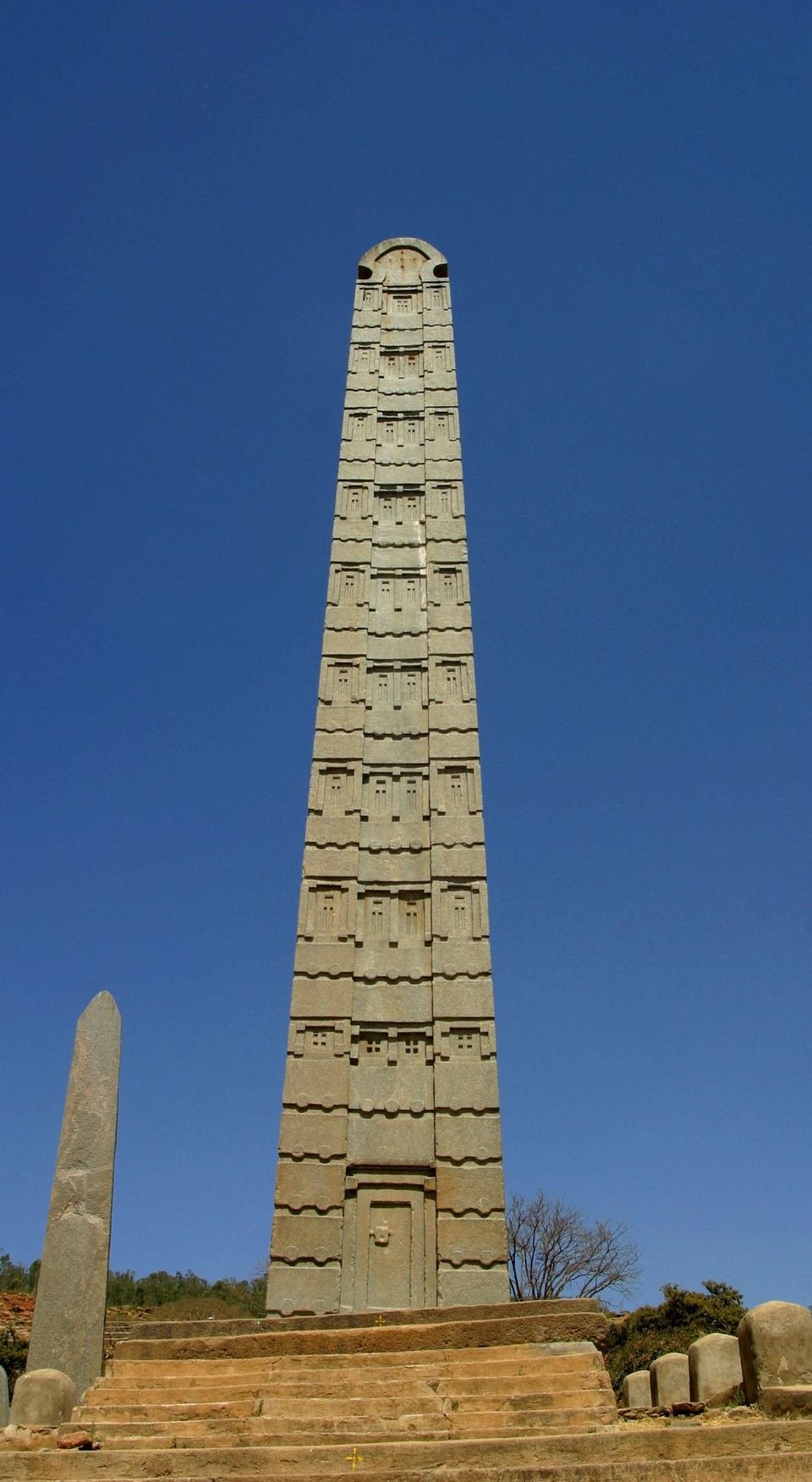
A useful opening question is what the carved architecture on a stele is meant to communicate. Ask your guide to compare details on different monuments, then look again before moving on. This gives you a way to read the site instead of simply hearing measurements. Choose a position that allows the whole monument to be seen without entering a restricted area, and let the guide explain the relationship to the surrounding burial landscape. If conservation work changes where visitors can stand, treat the available viewpoint as the starting condition of the visit.
Leave a little time after the explanation to look quietly. Drawing a simple outline or noting a detail can sharpen attention more than taking another near-identical photograph. When traveling with children, ask them what features make the carving resemble a building, then compare their observations with the guide’s account. Avoid climbing onto archaeological remains to obtain scale in a photograph. A person standing on an authorized path can provide a sense of proportion without creating that pressure on the site.
Add the museum when access permits
An archaeological museum can connect large monuments with the smaller objects through which people conducted everyday life and exchange. Visit Ethiopia identifies Aksum’s museum, the Ezana inscription, Dungur palace remains, May Shum and the tombs associated with Kaleb and Gebre Meskel among the city’s attractions. Its destination overview provides an orientation to those names. It does not establish which collection or site is currently open. Ask MUKA to verify access and propose a balanced selection instead of promising that every named place will be visited.
If the museum is available, consider entering after an initial site visit so that questions have already formed. Ask which objects were found locally and how their dating is established. If an exhibit lacks a clear label, ask for clarification rather than assuming that every object belongs to the same century. If the museum cannot be included, request another way to discuss material evidence; do not replace the missing visit with unsupported certainty about the past.
Sacred history and Saint Mary of Zion
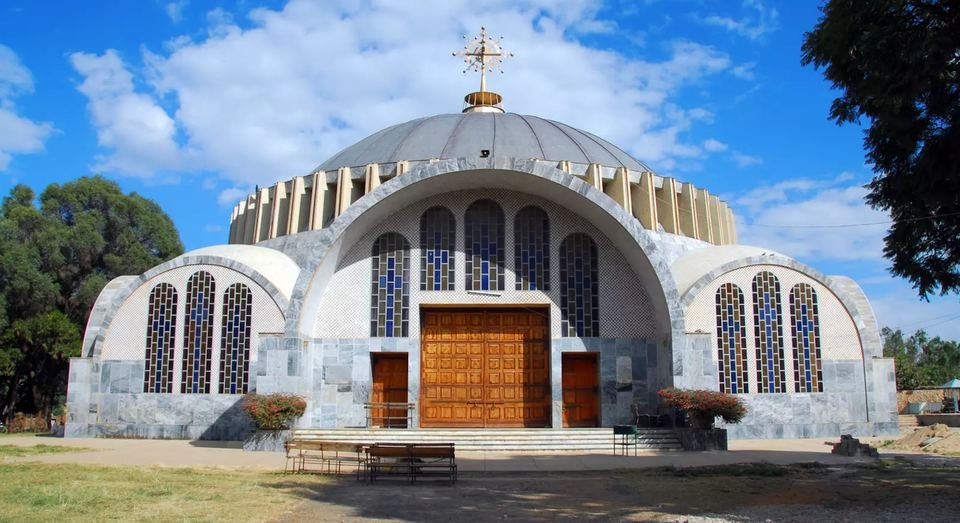
Approach the church precinct with an understanding that sacred claims and visitor access are separate matters. The tradition connecting Aksum with the Ark of the Covenant is important to its religious identity, but it is not a promise that a visitor can inspect the object. Ask your guide to explain the belief respectfully and make clear which areas, collections or buildings are actually open to your group. Restrictions may differ between spaces. Never assume that buying admission elsewhere grants access to a religious area, and avoid pressing staff for exceptions.
For an interested traveler, this distinction opens a better conversation. You can ask how religious tradition influences pilgrimage, community memory and the meaning of the city without demanding that a guide resolve every historical debate. Listen to the language used locally, and ask how a story is understood by those who maintain the place. A good visit can hold several kinds of knowledge together while remaining honest about their differences.
Choose a manageable stay
As a planning suggestion, allow two nights for an unhurried introduction when access and transport are suitable. One full day can connect the principal archaeological and religious areas; an additional portion of a day allows more discussion, an outlying site or a slower pace. The appropriate duration depends on actual arrival time and what is open. If you have a specialist interest in inscriptions, archaeology or ecclesiastical history, mention it before a guide is selected. A standard city overview and a detailed study visit require different preparation.
Transport and onward combinations
Define the start of an Aksum visit precisely. Meeting at an airport, at a central accommodation or after an overland journey creates different responsibilities and time allowances. A written proposal should name the transfer points and identify who checks whether the transport is operating. If an onward drive is discussed, ask for the actual route and a current assessment of every region it crosses. Do not regard an established historical circuit as automatic permission to travel between its stops. An alternative arrangement may be postponement, not merely a different road.
Within the city, group attractions by geography and visiting conditions. A vehicle can reduce repeated transfers, but you may still encounter uneven ground or steps at the final approach. Ask the guide to identify opportunities for sitting and restroom breaks before beginning a longer session. When designing a private visit, it is reasonable to spend more time at one archaeological area and omit another. The value of the day comes from understanding, not the number of stops recorded on a map.
When to plan and what to pack
Begin seasonal planning with your preferred kind of visit. If you hope to observe a religious celebration, ask for the verified calendar date, the expected pattern of activity and a plan for respectful viewing. If you prefer sustained conversation and room to examine details, discuss quieter dates. Neither choice removes the need for a current access assessment. Do not assume an annual event is proceeding in the same form as a past account, or that all nearby attractions keep their ordinary arrangements during it.
Prepare for time outdoors as well as interiors. A hat, comfortable footwear and a compact layer make it easier to adjust without carrying a large bag through narrow spaces. Request a local weather check shortly before departure and ask whether rain may affect surfaces or outlying access. Carry a notebook if names and dates matter to you; spellings can vary between signs and publications, and a guide can help you recognize when two names refer to the same place.
Accommodation areas and daily convenience
A town-based stay is the practical starting point to discuss for this proposed visit. Instead of choosing by a hotel photograph alone, ask how the location affects the first morning’s meeting point, evening meals and transport. If you prefer to rest between morning and afternoon sessions, select a place that supports that rhythm. Ask about the actual room arrangement, stairs, bathroom access and any dietary requirements. No hotel is recommended here as currently available, and a property should be confirmed by name before it is described as part of a purchased itinerary.
Accessibility and physical demands
Explain whether your main difficulty is distance, standing, steps, rough ground or heat. These need different adjustments. Someone comfortable walking on a level street may find an uneven archaeological surface challenging; someone who walks slowly may still enjoy a detailed site visit with appropriate pauses. Ask for the access conditions of the specific sites proposed, including any underground section. Do not accept a broad “easy city tour” label as a substitute. If part of the group chooses to stay outside, arrange a meaningful explanation and a comfortable waiting plan.
Photographing a living city
The monuments may be your reason for coming, but residents are not background props. Ask before photographing individuals, especially during worship or private work. A refusal is a complete answer. Avoid aiming cameras into homes or through shop doors without invitation. Ask separately about tripods, professional equipment and interior photography because permission for a personal photograph may not cover other uses. If a portrait is agreed, take time to make the exchange courteous rather than treating it as a transaction that ends the moment the shutter closes.
A more useful conversation with your guide
Prepare two or three questions tied to your interests. For archaeology, ask how a feature was dated and what uncertainty remains. For architecture, ask what survives and what has been reconstructed. For religious history, ask how traditions are practiced today. You do not need specialist vocabulary; a clear question invites a clearer answer. If the group has mixed interests, agree on a balance before the day begins so that one person’s detailed discussion does not leave everyone else standing without context.
Practical planning for a responsible visit
Ask how entrance arrangements and guide fees will be handled in the quotation. If you want to purchase crafts, request opportunities to speak with a seller about the item and its production. Avoid buying material presented as an ancient artifact without reliable legal and provenance advice. Keep purchases and donations separate from the guide’s interpretation of a site so that your curiosity does not create pressure on hosts. Build in an ordinary meal break and adequate rest; attention fades when the schedule ignores basic comfort.
Frequently asked questions
Are Axum and Aksum different destinations?
They are variant English spellings of the same city. Use the spelling provided on your confirmed travel documents, and check the full location whenever making transport arrangements. Search results can use either form, so spelling alone is not a useful test of an operator or source.
Can I see the Ark of the Covenant?
Do not plan on public viewing. Discuss the religious tradition with your guide and confirm the permitted areas of the church precinct. A responsible itinerary should describe what visitors can actually experience rather than suggesting access to a restricted sacred object.
Is a specialist guide worthwhile?
If archaeology or religious history is a principal interest, ask MUKA about the relevant experience of the guide. A good match helps you distinguish documented evidence, interpretation and tradition. Availability and language should be confirmed for your intended dates.
Can Aksum be combined with Gheralta?
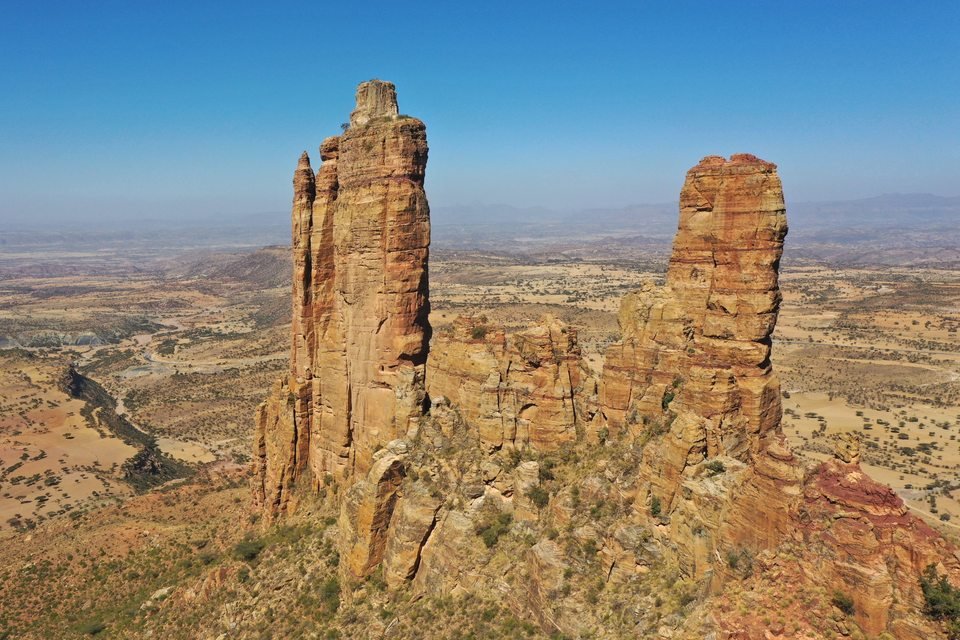
The destinations can be discussed as a geographical planning idea, but that is not confirmation of a viable current route. Regional access, transfer conditions and the physical demands of the chosen Gheralta churches must all be reviewed before an itinerary is offered.
Related MUKA journeys
The existing Grand Ethiopia Tour provides a wider catalogue context, and the Northern Ethiopia Heritage Tour is another historical-route reference. Ask MUKA to assess an Aksum-focused local stay if you need a shorter option. Such a request requires its own confirmed scope and access review; it should not be presented as an operating departure merely because a longer tour appears in the catalogue.
Research sources
Reviewed by MUKA Ethiopia Tours · 15 October 2026.

