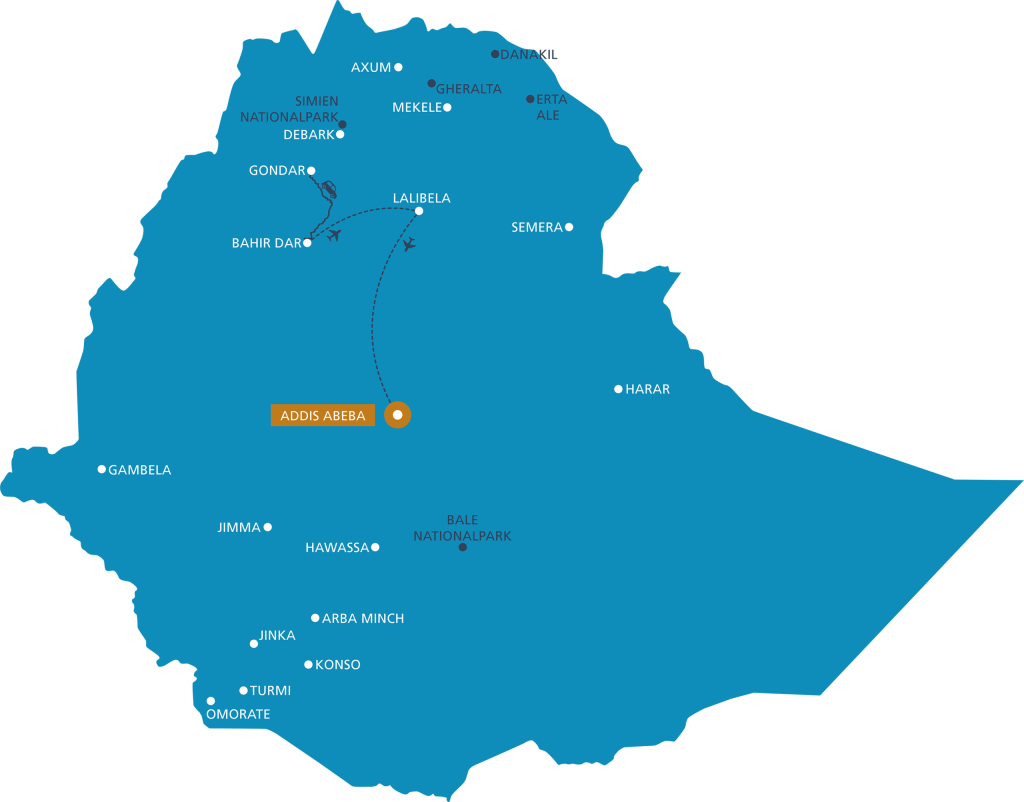
Discover Ethiopia from north to south on this unforgettable cultural journey with MUKA Ethiopia Tours. This 16-day Ethiopia tour combines the classic North Ethiopia Historic Route with the cultural landscapes of Southern Ethiopia and the Lower Omo Valley.
The journey takes you from the ancient monasteries of Lake Tana, the royal castles of Gondar, the dramatic Simien Mountains, the archaeological heritage of Axum, and the rock-hewn churches of Lalibela to the traditional villages of Dorze, Konso, Jinka, Mursi, Hamer, Dassanech, Karo, Arbore and other communities of the Omo Valley
This Ethiopia North and South Tour is ideal for travellers who want to experience the country’s most iconic cultural, historical and tribal destinations in one complete journey. The northern section introduces Ethiopia’s ancient civilisation, Orthodox Christian heritage, royal history, mountain landscapes and UNESCO World Heritage Sites.
The southern section takes you deep into the Rift Valley and Lower Omo Valley, one of Africa’s most culturally diverse regions. You will visit traditional villages, local markets, terraced landscapes, riverside communities and pastoralist groups whose ways of life are deeply connected to cattle, ceremonies, family traditions, body decoration, farming and local trade.
Welcome to Ethiopia. Upon arrival at Addis Ababa Bole International Airport, you will be welcomed by the MUKA Ethiopia Tours team and transferred to your hotel.
Depending on your arrival time, we begin exploring Addis Ababa, Ethiopia’s capital and diplomatic centre of Africa. The city tour may include the National Museum, where the famous fossil remains of Lucy are displayed, Holy Trinity Cathedral, Entoto Mountain, and Merkato, one of the largest open-air markets in Africa.
In the evening, you may enjoy a welcome dinner with Ethiopian food, traditional music and cultural dance.
1 night in a hotel in Addis Ababa
After breakfast, we transfer to the airport for the domestic flight to Bahir Dar, a beautiful lakeside city on the southern shore of Lake Tana.
Upon arrival, we take a boat trip on Lake Tana to visit selected island or peninsula monasteries. These ancient monasteries are known for their colourful religious paintings, manuscripts, crosses and peaceful forest settings.
In the afternoon, we drive to the Blue Nile Falls, locally known as Tis Abay, meaning “the smoking water.” Depending on the season and water level, we enjoy a walk through the surrounding countryside and viewpoints before returning to Bahir Dar.
1 night in a hotel in Bahir Dar
After breakfast, we drive north to Gondar, the former capital of Ethiopia and one of the most important historic cities in the country.
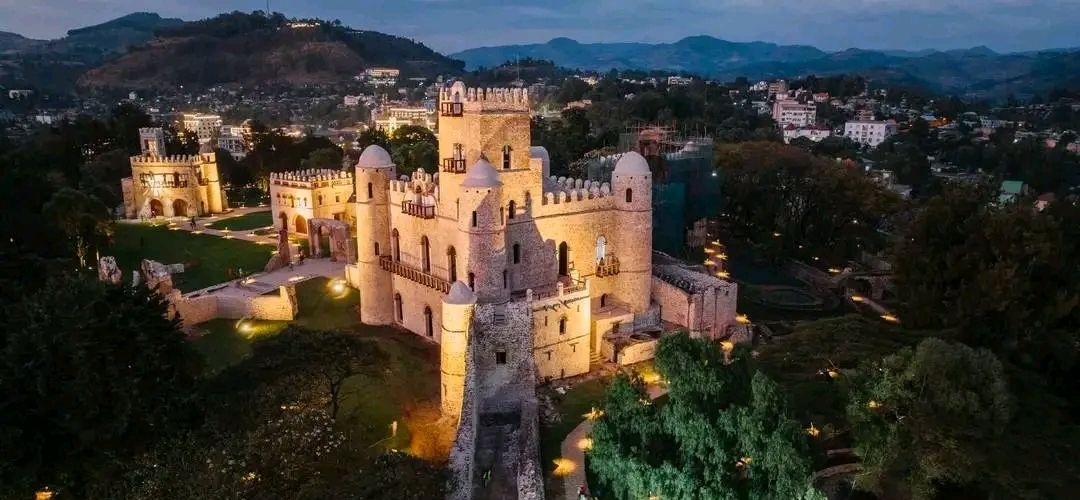
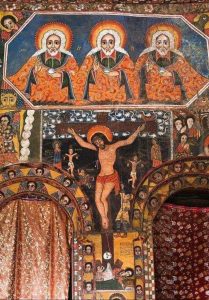
In the afternoon, we visit the Royal Enclosure, a UNESCO World Heritage Site famous for its castles, palaces, churches and royal buildings from the Gondarine period. We also visit Fasiladas Bath, where the annual Timket celebration is colourfully observed, and Debre Berhan Selassie Church, known for its remarkable ceiling paintings of angel faces.
1 night in a hotel in Gondar
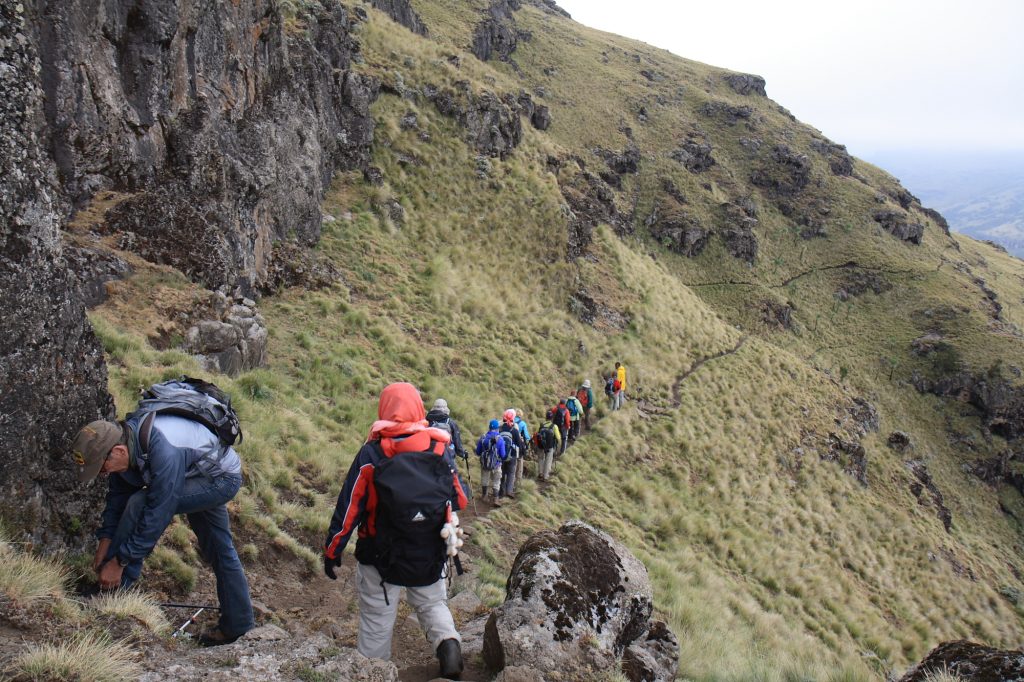
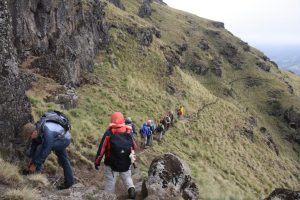
Today we drive to the Simien Mountains, one of Ethiopia’s most spectacular natural landscapes. The park is famous for its dramatic escarpments, deep valleys, highland plateaus and endemic wildlife.
We enjoy scenic viewpoints and short walks, with the possibility of seeing the Gelada baboons, often called “bleeding-heart monkeys.” Depending on the route and weather, we may explore areas around Debark, Sankaber or other accessible viewpoints.
The Simien Mountains offer a beautiful contrast to the historic cities of Northern Ethiopia and give travellers a chance to experience the highland wilderness of the country.
1 night in a lodge or hotel near the Simien Mountains
After breakfast, we continue towards Axum, one of the most important ancient cities in Ethiopian history. The route passes through impressive mountain scenery, rural villages and dramatic northern landscapes.
Depending on flight availability and local conditions, this transfer can also be arranged by domestic flight through Addis Ababa or another suitable connection. MUKA Ethiopia Tours will advise the best available option during the time of booking.
Upon arrival in Axum, we check in to the hotel and rest after the journey.
1 night in a hotel in Axum
This morning, we explore Axum, the ancient centre of the Aksumite Kingdom and one of Ethiopia’s most important archaeological and spiritual destinations.
The visit may include the famous stelae field, the ruins of ancient palaces, archaeological sites, inscriptions, tombs, and the Church of St. Mary of Zion compound. Axum is also deeply connected with Ethiopian Orthodox Christian tradition and the legend of the Ark of the Covenant.
Later, we transfer to the airport for the domestic flight to Lalibela. Upon arrival, we transfer to the hotel.
1 night in a hotel or lodge in Lalibela
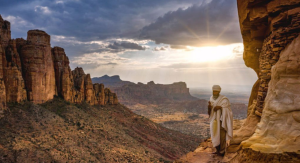
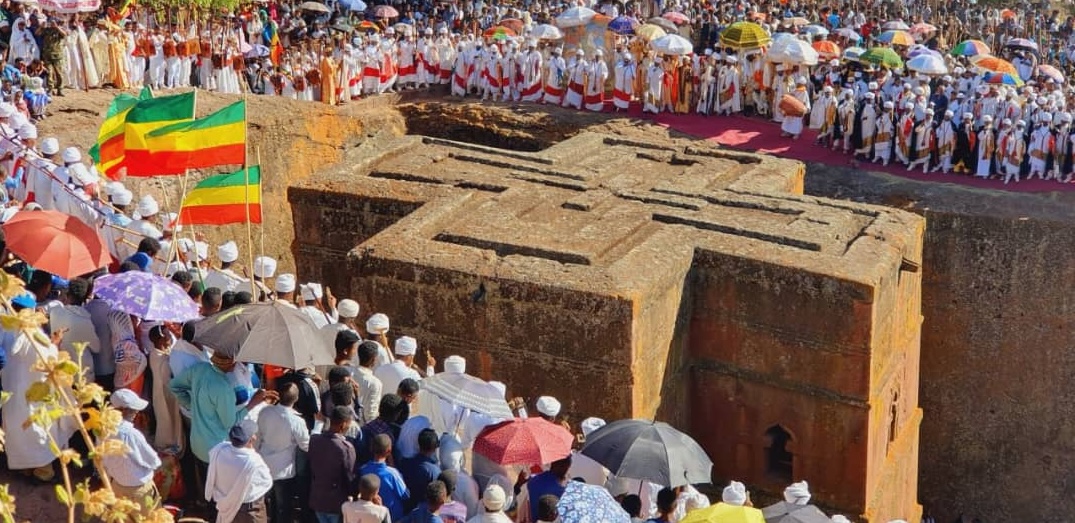
Today is dedicated to exploring Lalibela, one of the greatest spiritual and architectural wonders of Ethiopia.
We visit the famous rock-hewn churches, carved directly from volcanic rock and still used as active places of worship. The churches are connected by tunnels, trenches and courtyards, creating a deeply atmospheric pilgrimage landscape.
The visit usually includes the main church groups and the iconic Church of St. George, one of the most photographed religious monuments in Ethiopia. Lalibela is not only a historic site, but also a living spiritual town where priests, pilgrims and local worshippers continue centuries-old traditions.
1 night in a hotel or lodge in Lalibela
After breakfast, we may continue exploring Lalibela or take an optional excursion to Yemrehanna Kristos Church or Asheton Maryam, depending on interest, fitness level and flight schedule.
Later, we transfer to the airport for the domestic flight back to Addis Ababa. On arrival, you will be transferred to your hotel for rest before starting the southern section of the journey.
1 night in a hotel in Addis Ababa
After breakfast, we transfer to the airport for the domestic flight from Addis Ababa to Arba Minch.
Upon arrival, we meet the local driver-guide and continue to the Gamo Highlands to visit the Dorze people. The Dorze are known for their tall bamboo houses, traditional weaving, music and use of enset, also called false banana.
During the village visit, we learn how the Dorze build their unique homes, prepare local food from enset, spin cotton and weave colourful traditional fabrics. After the visit, we return to Arba Minch, one of the most beautiful towns in Southern Ethiopia, located between Lake Abaya and Lake Chamo.
1 night in a hotel or lodge in Arba Minch
After breakfast, we take a boat trip on Lake Chamo. The lake is famous for its large crocodiles, hippos, pelicans, fish eagles and other water birds. The boat excursion gives a beautiful contrast to the cultural visits and introduces the natural side of Southern Ethiopia.
After the boat trip, we drive towards Konso. The Konso Cultural Landscape is a UNESCO World Heritage Site known for its terraced hillsides, stone-walled villages, generation poles, wooden statues and traditional social systems.
The Konso people have developed impressive farming methods in a dry and rocky environment, making the area one of the most remarkable cultural landscapes in Ethiopia.
1 night in a hotel or lodge in Konso
Today we continue our journey from Konso to Jinka, the gateway to Mago National Park and the Mursi people.
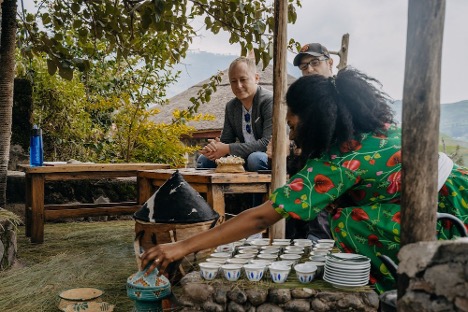
On arrival in Jinka, we visit an Ari village to learn about local farming, pottery, traditional houses, food preparation, coffee culture and everyday village life.
If time allows, we may also visit the South Omo Research Centre and Museum, which provides useful background about the peoples and cultures of the Lower Omo Valley. This day gives a softer introduction to the cultural diversity of South Omo before travelling deeper into the remote Omo Valley.
1 night in a hotel or lodge in Jinka
Early in the morning, we drive through Mago National Park to visit a Mursi village. The Mursi are among the best-known communities of the Lower Omo Valley, particularly recognised for the lip plates traditionally worn by some women, scarification, body decoration, cattle culture and strong social identity.
The visit will be arranged respectfully with local guides and community representatives. We take time to understand daily life, family compounds, cattle traditions and the meaning behind cultural practices.
After the visit, we return to Jinka and continue driving towards Turmi, the heartland of the Hamer people. On the way, depending on the day, we may visit a local market such as Key Afer, where different communities including Ari, Banna, Hamer and Tsemay people come together to trade.
1 night in a lodge in Turmi
After breakfast, we drive to Omorate, located near the Kenyan border. Here we cross the Omo River by local boat to visit the Dassanech people.
The Dassanech live in a dry lowland environment and have traditionally depended on livestock, fishing, seasonal farming and movement along the Omo River.
After returning to Turmi, we visit a Hamer village. The Hamer people are known for their beautiful hairstyles, leather skirts, beadwork, cattle culture, traditional dances and the famous bull-jumping ceremony, which may be witnessed if it takes place during your visit.
The afternoon is a good time to observe village life, meet families and learn about the social importance of cattle, marriage customs and local identity.
1 night in a lodge in Turmi
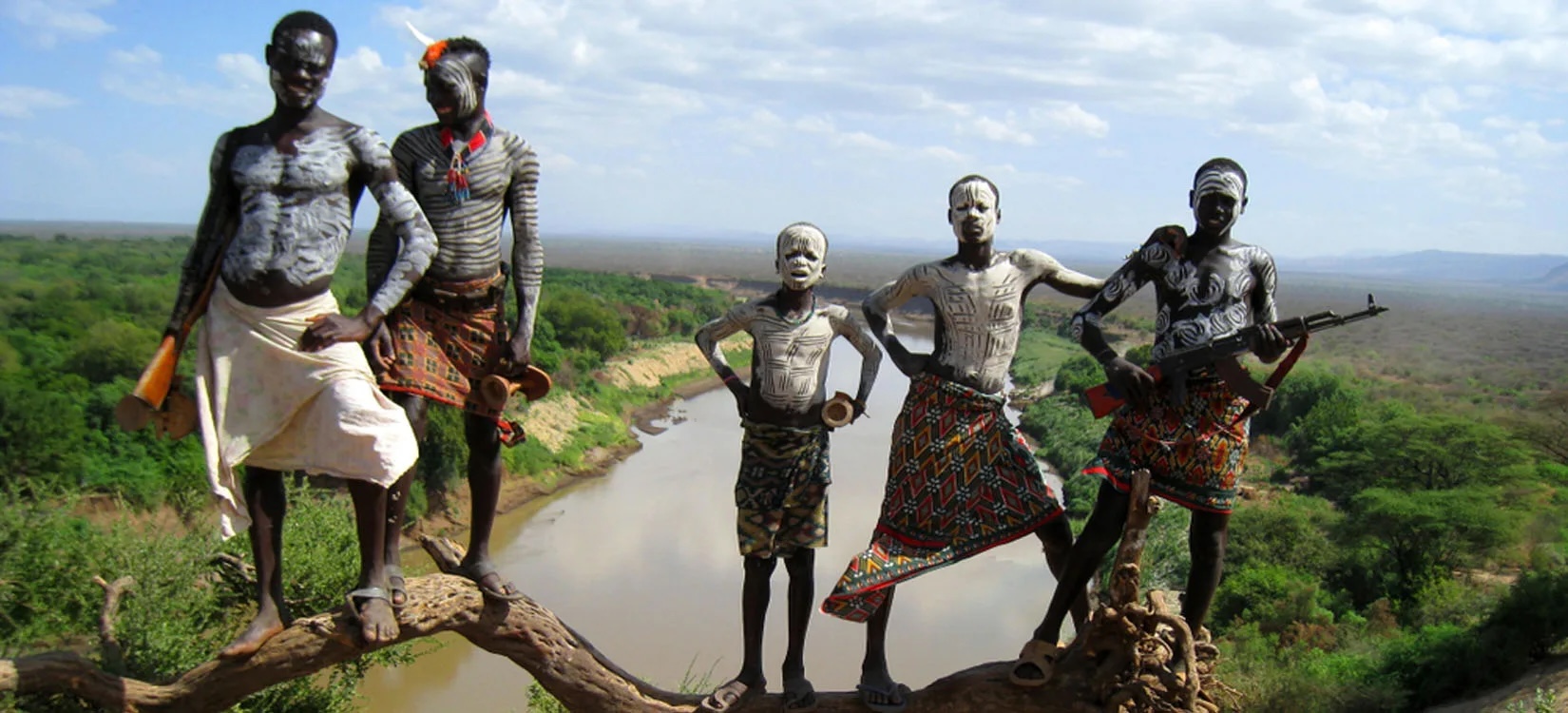
Today we make an excursion to the Karo people, one of the smaller ethnic groups living along the Omo River.
The Karo are especially known for decorative body painting, scarification and villages located on scenic high banks above the river. Their artistic use of natural colours and patterns makes this visit one of the most photogenic experiences in the Lower Omo Valley.
On the way back to Turmi, we may visit a local market if it matches the travel day. Dimeka Market, Turmi Market or Alduba Market can offer excellent opportunities to observe local trade, clothing, hairstyles, jewellery, livestock exchange and interaction between neighbouring communities such as the Hamer, Banna, Ari, Tsemay and others.
1 night in a lodge in Turmi
After breakfast, we begin our return journey north. On the way, we visit the Arbore people, who live in the lowlands between Turmi and Konso.
The Arbore are known for their distinctive dress, beadwork, pastoral traditions and historical connections with surrounding communities.
We continue to Konso and then drive back to Arba Minch. The day offers changing landscapes, from the dry Omo lowlands to the terraced hills of Konso and the greener highlands around Arba Minch.
We arrive in Arba Minch in the late afternoon or evening.
1 night in a hotel or lodge in Arba Minch
After breakfast, you will be transferred to Arba Minch Airport for your domestic flight back to Addis Ababa.
Upon arrival at Bole International Airport, you will be met and transferred to your hotel or assisted with your international departure connection.
Depending on your international flight schedule, an optional Addis Ababa city tour, shopping stop or cultural dinner with traditional music and dance can be arranged.
End of the Ethiopia North and South Cultural Tour
You can also make it on your own schedule!
This Ethiopia Historic Route and Omo Valley Tribes Tour is available as a private tour throughout the year. Fixed small-group departures can be arranged during the best travel seasons, Ethiopian festivals and popular Omo Valley market days.
Contact us for exact dates, availability and group prices.
This Ethiopia tour is not only about visiting monuments, churches and villages. It is a journey into the everyday life of Ethiopians across very different landscapes, faith traditions, ethnic groups and cultural settings.
In Northern Ethiopia, you will see how religious life, ancient history and community traditions remain deeply connected. In Bahir Dar, Lake Tana monasteries preserve centuries-old manuscripts, paintings and spiritual practices. In Gondar, royal history is visible in castles, churches and traditional neighbourhoods. In Lalibela, priests, pilgrims and local worshippers continue to use the rock-hewn churches as living places of prayer.
In Southern Ethiopia, the experience shifts from ancient kingdoms to living cultural diversity. In Dorze, you will see how local families build bamboo houses, prepare food from enset, spin cotton and weave traditional clothes. In Konso, you will learn how communities manage land, protect villages, build terraces and preserve traditional social systems.
In the Lower Omo Valley, you will meet communities whose lives are closely connected to cattle, rivers, seasons, markets, ceremonies and oral traditions. Visiting the Hamer, Mursi, Dassanech, Karo, Arbore, Ari and Banna people gives you an insight into different ways of living, dressing, decorating, trading, celebrating and preserving identity.
MUKA Ethiopia Tours encourages respectful cultural exchange. We work with local guides, church representatives and community members so that visits are organised in a fair, responsible and culturally sensitive way.
Visitors to Ethiopia need:
Recommended items:
This tour includes domestic flights, road transfers, cultural visits, historic sites, churches, highland landscapes and remote village experiences. Some days involve early starts, long drives and changing road conditions, especially in the Lower Omo Valley.
Photography should always be done respectfully. In churches, photography may be restricted or require permission. In Omo Valley villages, photography may require permission and a small local fee. Your guide will help arrange this properly and explain local expectations.
Domestic flight schedules in Ethiopia may change. MUKA Ethiopia Tours will arrange the most practical route based on available flights, local conditions and the final travel dates.
By joining this Ethiopia North and South Tour with MUKA Ethiopia Tours, your visit directly supports:
In Northern Ethiopia, your visit helps support heritage tourism, religious sites, local guides, museums, family-run hotels and communities living around historic destinations.
In Southern Ethiopia, your entrance fees, local guide payments, village contributions and community photography arrangements help generate direct benefits for the people you meet. The tour also supports the preservation of cultural knowledge, traditional crafts, local markets and community-based tourism initiatives.
MUKA Ethiopia Tours believes that tourism should create meaningful connections, not only sightseeing. We aim to make every visit fair, respectful and beneficial for both travellers and host communities.
Would you like to travel across Ethiopia with your partner, family, friends, colleagues or special interest group? This Ethiopia Historic Route and Omo Valley Tribes Tour can be arranged as a fully private and tailor-made trip.
With a private tour, you can:
We would be happy to prepare a non-binding itinerary proposal for your individual Ethiopia tour.

Whether you have questions about Ethiopia’s historic route, Lalibela, Gondar, Axum, Simien Mountains, South Ethiopia, Omo Valley tribes, travel safety, road conditions, cultural etiquette, photography rules, accommodation, domestic flights or private tour arrangements, please contact MUKA Ethiopia Tours. We will be happy to help you design a meaningful, responsible and unforgettable Ethiopia trip.
24 Days Ethiopia Historic Route, Gheralta Churches, Danakil Depression, Erta Ale Volcano and Omo Valley Tribes Tour Discover Ethiopia from north to south on one of the country’s most complete
16 Days Ethiopia Historic Route and Omo Valley Tribes Tour Discover Ethiopia from north to south on this unforgettable cultural journey with MUKA Ethiopia Tours. This 16-day Ethiopia tour combines

Embark on an unforgettable 8-day journey through South Ethiopia, where vibrant cultures and breathtaking landscapes await. Discover the enchanting Omo Valley, home to diverse tribes like the Mursi, Hamer, and